BREAKING NEWS
Showing posts with label Technology. Show all posts

Thursday, 23 June 2016

Steam Summer Sale 2016 coming up in a few hours; PayPal confirms details of Summer Sale


It has been a huge question for game enthusiasts whether the annual Steam Summer Sale would start at an earlier date this year. Valve did not confirm a definite start date and time for the Steam Summer Sale 2016, although it was PayPal who first shared the much-needed details ahead of the game publisher. It turns out that the highly anticipated video game sale of the year will hit in just a few hours as of writing, and the buyers can expect satisfying price discounts for today's biggest game titles.
Once again, those who are hooked in to video games but would like to have them at an affordable price may tune in to Steam starting today. At the very start of the summer sale, the buyers will surely be flocking at the most popular video game titles that are placed on sale. It is important to know the start time of the sale to be among the few first to avail the hottest promo.
As reported by Trusted Reviews, the Steam Summer Sale will begin at around 5:45 p.m. in UK time or 9:45 a.m. PDT today, June 23. The digital summer sale event will run for days until it formally closes on July 4 at around 6:00 p.m. BST or 10 a.m. Pacific time. There is more than a week for shopping around Valve's catalogue of cool games, giving the public more time to get all the deals that they want.
This year, it was PayPal who first spilled the beans through their Twitter post last week. Digital Trends reported that it is also PayPal that confirmed the start date of the previous years' Steam summer sales, and all of their confirmations have turned out correct. 
Game Spot reported that those who have bought Steam credits from Best Buy can enjoy a larger price discount. The customer who already acquired a Steam credit will be given 20 percent discount on a second card. It means that when a buyer gets two Steam Wallet cards worth $200 each, he can only pay $180 for one. The buyer will have another $20 store credit.

Tuesday, 14 June 2016

Apple May Have Figured Out the iPhone’s Most Promising Feature


LAST FALL, APPLE introduced 3D Touch, a feature that lets the iPhone 6s and 6s Plus detect light and firm touchscreen presses. You might also remember that event as the last time you gave 3D Touch any thought. That’s about to change.


By weaving 3D Touch more deeply into the fabric of iOS 10—and specifically, making it an essential part of its lock screen—Apple finally arms potentially revolutionary feature with true purpose. You may not use 3D Touch much today, but after iOS 10 arrives this fall, you may wonder how you lived without it.

Nothing to See

Apple’s 3D Touch is a remarkable bit of engineering. A layer of capacitive sensors, snuggled up beneath the phone’s LCD display and backlight, detects pressure from screen above. A soft press, called a “Peek,” shows lets you preview things like links, photos, and messages from your inbox. Pressing harder triggers a “Pop,” and opens whatever it is you’re previewing. Adding a z-axis to a smartphone screen is a brilliant idea with many benefits. Most obviously, it cuts the number of steps required to perform your most common tasks. So-called Quick Actions are a great example: With a firm press, you can bring up your frequent contacts, compose a tweet, or check a song with Shazam, all from your home screen. In the end, each one of these Quick Actions saves you a few taps.
These taps have a way of adding up. Eliminating one here, a couple there, saves a few milliseconds of friction in the moment and untold hours over time. That’s why UX designers make such a big deal of removing them from your workflow. But it can be tricky convincing someone that a more efficient way of doing something is worth relearning established habits. You’ve experienced this tension firsthand if you’ve ever tried showing someone a useful keyboard shortcut, only to hear, “I’m fine, thanks.”
A truly compelling use case can go a long way in cases like these. Provide something that becomes integral to how people interact with their phones every time they pick them up and it’ll catch on. So far, Apple and the myriad developers making apps for the iPhone have not done that with 3D Touch. That’s not terribly surprising, given that most iOS devices don’t even support it; but it is a shame, because 3D Touch could be truly special. It’s an entirely new way of interacting with your phone, begging for applications worthy of your interest.
With iOS 10, it may finally have them: 3D touch is instrumental to Apple’s newly rethought lock screen, in a way that could fundamentally change how you interact with your iPhone.

Good Touch

The lock screen in iOS 10 offers a few new features, like waking when you lift your iPhone so you don’t miss all those notifications you blow past with Touch ID. That’s nice, but smartphones like the Moto X have done this for years. In fact, other smartphones already match or surpass much of what iOS 10 offers. But they don’t offer the one thing that makes the iOS lock screen truly unique: 3D Touch.
Until now, 3D Touch saved you the hassle of going into an app to access its features. Now it will spare you from going into your phone at all. Have a chat notification? 3D-Touch brings you into the conversation. Want to know where your Uber is? Give it a Pop, and get live tracking of your driver. Need an updated score? Go ahead and soft-press ESPN, and see how badly the Baltimore Orioles bullpen can blow it in real-time. Are you, like me, one of five or six Apple News enthusiasts? If you get a story alert, you can read the whole thing from the lock screen, thanks to 3D Touch.
Last year, it seemed like Apple’s Proactive Assistant, which anticipates which apps you use when, then places them on the lock screen, would kill the home screen. It didn’t, and neither will 3D Touch. But with iOS 10, you’ll use your home screen a whole lot less. For apps that send regular notifications, you’ll hardly use it at all.
And this is before Apple’s officially released iOS 10. Developers have yet to ponder the implications of ceding actions to the lock screen. This offers a compelling reason do that. Figuring out how 3D Touch can help your app in isolation has clearly been a challenge. But in the context of the lock screen, it’s easy: Get in, get out.
Granted, 3D Touch won’t touch every part of your phone. But it will do something far more important: Ensure that you touch your phone less.
Go Back to Top. Skip To: Start of Article.

Xbox One S has ‘additional processing power’ over original model


Microsoft unveiled its new Xbox One S console yesterday, and now details are starting to surface about exactly what has changed inside. In an interview with Polygon, The Coalition studio head Rod Fergusson revealed that the new Xbox One S has additional raw GPU and CPU power compared to the original Xbox One console. As Gears of War 4 is a HDR game, The Coalition has been able to take advantage of that extra power to improve frame rates in particularly demanding parts of the game.
Microsoft has confirmed the "additional processing power" in a statement to The Verge. "We have the same SOC architecture as Xbox One today," explains a Microsoft spokesperson. "For games that want to take advantage of HDR, we gave developers access to a small amount of additional processing power." The additional processing power won't be significant, and it appears it's limited to HDR titles. Microsoft isn't detailing exactly what chipsets have changed inside the new Xbox One S, but it's reasonable to assume that the Xbox One AMD APU chip has been downsized somewhat for the smaller console, which will help with processing power and thermal thresholds.

XBOX DESIGN LAB CUSTOM CONTROLLERS


Monday, 13 June 2016

Gmail, Hotmail and Ymail account details openly traded by Russian mafia


And it is Russians who are most likely to be targeted, too. Russia's own Mail.ru email service accounts for the majority of hacked accounts at 57 million, but a large number also belong to Gmail, Hotmail and Yahoo Mail users.
Yahoo Mail credentials totalled 40 million, or 15 per cent of the haul, Hotmail accounted for 33 million, or 12 per cent, while 24 million, or nine per cent, belonged to Gmail account holder.  
It wasn't just email accounts that were targeted, according to Reuters, with Holden also discovering thousands of other stolen username and password combinations that appear to belong to employees of some of the largest US banking, manufacturing and retail companies.
Holden stumbled on the discovery after he saw a young Russian hacker - since nicknamed "The Collector" - bragging about the information haul in an online forum. He was asking for just 50 rubles – less than $1 – for the lot, but Holden was given the information for free after he said he'd big up the hacker online. 
Mail.ru spokeswoman Madina Tayupova told Reuters: "We are now checking whether any combinations of usernames/passwords match users' emails and are still active.
"As soon as we have enough information we will warn the users who might have been affected," she said, adding that Mail.ru's initial checks found no live combinations of usernames and passwords that match existing emails.
A Microsoft spokesman said: "Microsoft has security measures in place to detect account compromise and requires additional information to verify the account owner and help them regain sole access."
Google and Yahoo are yet to comment. We'll update this article when we hear more. 

Thursday, 9 June 2016

Moto Z design modular


A Lenovo anunciou nesta quinta-feira (09/06) durante a Tech World 2016 os novos aparelhos da Motorola, o Moto Z e o Moto Z Force. Trata-se também da estreia da fabricante no mercado de aparelhos modulares. 
 
Ambos podem ser customizados com acessórios chamados “Mods”. Eles se unem a traseira do aparelho através de poderosos ímãs, potencializando algumas funcionalidades. É o caso de um projetor, caixas de som mais potentes e packs de bateria. No vídeo de apresentação do conceito (veja abaixo), a Motorola revela como funcionará tais acessórios. 
 
moto-z-motomods
 
Quanto às configurações, o Moto Z vem com chip Snapdragon 820, 4GB de RAM, 32 GB ou 64 GB de armazenamento, tela de 5,5 polegadas QHD AMOLED, câmera traseira de 13MP com autofoco a laser e bateria 2,600 mAh.
 
A Lenovo, que adquiriu a Motorola em 2014, diz que a bateria tem autonomia para 30 horas de uso. 
 
Já o Moto Z Force inclui as mesmas configurações, mas acrescenta uma tela à prova de estilhaçamento e uma bateria de 3,500 mAh que consegue dar, em apenas 15 minutos, carga suficiente para 15 horas e 40 horas com carga completa. Nessa versão, a câmera apresenta 21 MP e acrescenta autofoco, o aparelho é mais robusto também para acomodar uma bateria maior. 
 
Moto Mods

A Motorola lançará, pelo menos, três novos Moto Mods: o Projetor Insta-Share, o speaker JBL SoundBoost e o power pack Incipio OffGrid, além de um número de cases para usuários customizarem o celular, incluindo opções com materiais naturais, como madeira.
 
O Insta-Share Projector foi desenhado para usar a tela do smartphone e projetá-la em qualquer superfície com até 70 polegadas. Ele também acrescenta uma pequena bateria adicional, que dá cerca de uma hora extra, de acordo com Seang Chau, VP senior de engenharia de software da Motorola.
 
Já o JBL SoundBoost é dedicado para usuários exigentes em relação a qualidade e ao alcance do som, com capacidade de oferecer 10 horas extras de bateria. 
 
Por fim, o power pack Incipio offGrid dá vida extra a bateria, acrescentando mais 22 horas, diz a Motorola. Uma opção de carregamento sem fio também está disponível, com suporte tanto para os padrões Qi 1.2.1 e PMA.
 
Novas opções também devem ser anunciadas em breve, tendo em vista que a companhia lançou um kit para desenvolvedores e uma competição para encorajar a criação de mais Moto Mods. 
 
Segundo a fabricante, os novos aparelhos e os Mods chegam ao mercado em setembro deste ano. Os valores ainda não foram divulgados.  


Tuesday, 7 June 2016

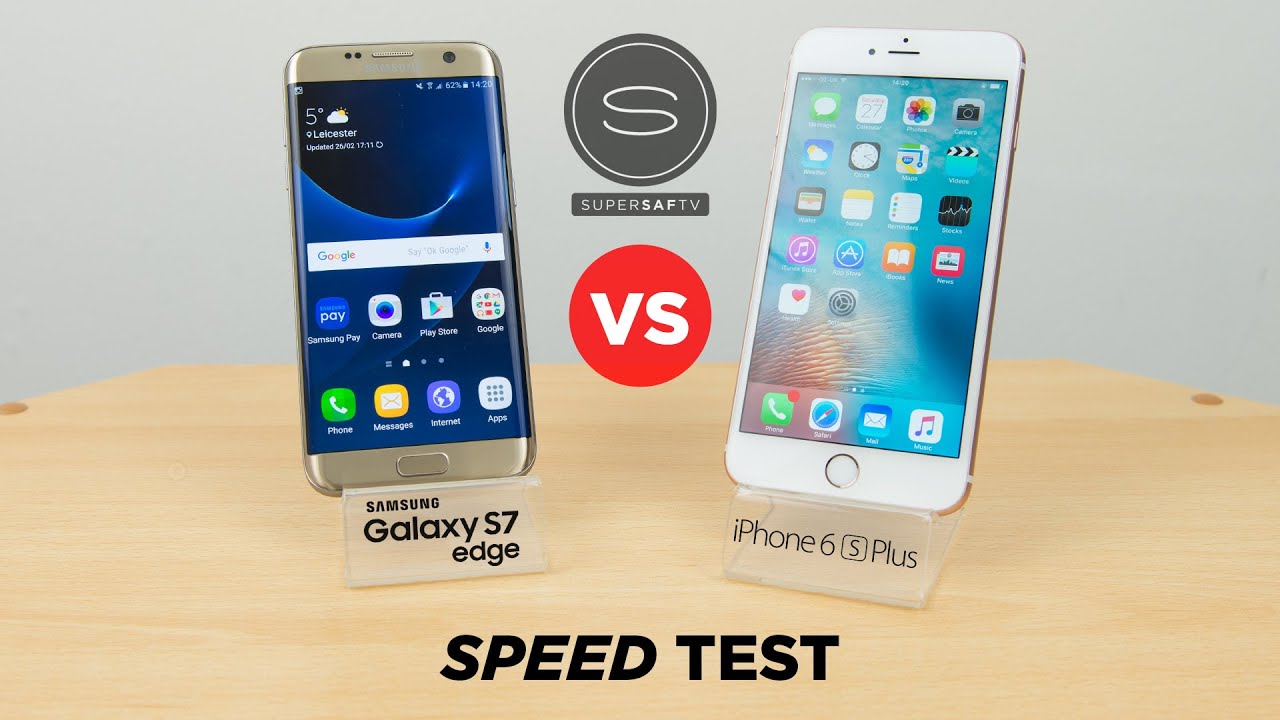
iPhone 6s vs Samsung Galaxy S7


Apple's iPhone 6s could learn a thing or two from the Samsung Galaxy S7...

It doesn't take a genius to figure out, with just a cursory glance, who the two key players in the mobile industry are; Apple and Samsung. It's been the case for quite some time, though many thought, rather sensibly, that based on Samsung's declining performance in the last two years the firm's heyday was over, Apple was coming out on top, and some other usurper would emerge to take the top spot in the Android space. Not so, it seems. Apple is far from out for the count, but it's true that times are changing for the company after the poorest performing quarter since anyone can remember in Q1 2016. During that same quarter, Samsung has managed to reclaim its former glory and pull itself out of a slump, with the firm selling Galaxy S7 handsets like hotcakes, pleasing analysts and shareholders no end. So we have returned, more or less, to the status quo of the major opponents being Samsung and Apple, the balance has shifted ever so slightly, but crucially these two are the ones to watch.
The duo have had an interesting history and a complex relationship though, it isn't as simple as just being sworn enemies. On the one hand, there's been plenty of animosity, Samsung and Apple are the two nearest and most direct rivals in the mobile space, and Samsung is Apple's biggest threat from the world of Android. The pair have had plenty of legal battles across the globe usually focusing on key smartphone features, technologies or design styles. Both players have claimed, won, and lost, variously about a range of issues, each has alleged the other has stolen ideas and concepts, sometimes the courts have upheld these allegations, and sometimes not. There's also been a lot of tit-for-tat one-upmanship in terms of key services and features, for example, Apple launches Apple Pay, then Samsung launches Samsung Pay; there are numerous similar examples over the years going both ways in terms of who came first.
But then on the other hand, Samsung is in partnership with Apple in some very important ways; it has had a major part in designing and manufacturing the majority of Apple's A-series processor chips for both its iPhone handsets and iPad tablets, and in the future it is expected that Apple will adopt Super AMOLED display technology for its iPhone handsets and is seriously considering hiring Samsung to produce these new panels. That's because Samsung is currently pretty much king of Super AMOLED displays, and they are the best displays on the market.
Samsung really brought its A-Game with the unveiling of the Galaxy S7 series (the Samsung Galaxy S7 and Galaxy S7 Edge) at MWC 2016 in February, by all accounts pre-order figures are through the roof and it's proving a very popular set of handsets with consumers. It probably has something to do with combining the amazing premium design of the Galaxy S6 series with re-introducing much-missed features such as microSD support and waterproofing.
Apple also upped the ante a bit with the iPhone 6s launch. Apple's "s" series devices are usually considered incremental, and we typically see the solid number models (iPhone 5, iPhone 6 etc.) making the big, bold changes and introducing cutting-edge new features. While that formula was broadly true of the iPhone 6s and iPhone 6s Plus, Apple did pull one or two extra punches which we wouldn't normally expect to see on an "incremental" model; things like the 3D Touch pressure-sensitive display panel, and yet more noteworthy camera tweaks.
But which is the more compelling device?

iPhone 6s vs Samsung Galaxy S7: Specs

Here’s the specs for the iPhone 6s:

  • Display: 4.7-inch display with a 1334x750-pixel resolution at 326ppi, 3DTouch enabled
  • Dimensions: 138.3mm  x 67.1 mm x 7.1 mm
  • Weight: 143 grams
  • Storage: 16, 64, or 128GB
  • Memory: 2 GB RAM
  • Processors: A9 chip with 64-bit architecture and M9 motion coprocessor
  • Front camera: 5 MP
  • Rear camera: 12 MP photos. ƒ/2.2 aperture. 4k video
  • Battery: 1715 mAh
  • Colors: Silver, Space Grey, Gold, or Rose Gold
And here’s the specs for the Galaxy S7:
  • Display: 5.1-inch display with a 2560×1440-pixel resolution at 577pp
  • Dimensions: 142.4mm  x 69.6 mm x 7.9 mm
  • Weight: 152 grams
  • Storage: 32 or 64, plus support for microSD cards up to 200GB
  • Memory: 4 GB RAM
  • Processors: Samsung Exynos 8890
  • Front camera: 5 MP
  • Rear camera: 12 MP, f/1.7 aperture, 4K video
  • Battery life: 3000 mAh
  • Colors: Dark Grey or Gold
Let’s just start by saying that Samsung got storage right with the S7. First, it starts at 32GB (and comes in a 64GB version too). Second, it’s expandable by another 200GBs thanks to its new microSD card slot. That compares to the iPhone 6s’ PATHETIC 16GB entry option. Although I do like that the iPhone 6s offers a 128GB option as well, which the S7 does not. Samsung also got the RAM right, doubling what the 6s has with 4GB total.
As for processors, the raw specs don’t tell an easy story. The iPhone gets that INSANELY powerful A9 chip, while the S7 gets Samsung’s own Exynos 8890. Of course, as Apple knows, raw specs don’t solely make a fast phone. It also depends how the software can utilize the RAM and processors. So we’re very interested in seeing real world benchmark tests between the two devices.
Early reports indicate Qualcomm's Snapdragon 820 chipset is something of a monster. After a dismal year in 2015, the biggest Q in tech has come out guns blazing in 2016 with the 820 and the return of its own, custom KRYO cores -- the Snapdragon used ARM ones. 
Generally speaking, the Galaxy S7 has vastly superior specs to the iPhone 6s. But this was always going to be the case and no where is it more obvious than in the iPhone 6s' 750p display, which just isn't really good enough these days. Why no 1080p panel in the 6s, Apple? The short answer: the iPhone 7. 

iPhone 6s vs Samsung Galaxy S7: Design & Build

The S7 — as with the iPhone 6s — kept, mostly, the same look as its predecessor. Both feature metal bodies with glass screens. You get twice as many color options with the iPhone, however. One thing Samsung did manage to do though is reduce the size of the camera bump on the S7.
Samsung also was able to make the S7 IP68 dust and water proof—something the iPhone 6s is not. You can actually submerge the S7 for up to 20 minutes and it will work just fine when you take it out. The iPhone 6s isn’t waterproof, but it’s rumored the iPhone 7 could be—and it may even go further: allowing you to use the phone’s display with wet fingers.
As for size and weight the iPhone is still the thinner and lighter phone coming in at 7.1mm thin versus the S7’s 7.9mm thickness and 143 vs 152 grams.

iPhone 6s vs Samsung Galaxy S7: Display and Battery

As for displays, the S7 features a larger one at 5.1 inches versus the iPhone 6s’ 4.7 inch display. However, size isn’t the only difference. The S7 kills the iPhone in screen resolution. It features a 2560×1440 pixel display at 577 dpi versus the iPhone 6s’ 1334x750 pixel resolution at 326ppi. That being said, the S7 doesn’t have any kind of pressure-sensitive 3D Touch display like the 6s does.
But when we get to battery, the S7’s 3000 mAh battery trounces the iPhone’s 1715 mAh pack. However—just as with RAM and processors—how long a phone’s battery lasts has as much to do with the size of the pack as it does with how well the software works to conserve power.

iPhone 6s vs Samsung Galaxy S7: Cameras

We’ve already said Samsung was able to reduce the camera bump on the back of the S7 thanks to its new lens, but besides that, just based on specs, it looks like the cameras on each device are the same. Both have 5MP front and 12MP rear cameras. However, the S7 features a f/1.7 aperture versus the iPhone 6s’ f/2.2 aperture. This means the S7 can take much better night shots. So it wins, hands down. It’s also been reported that the S7’s camera finishes focusing in on a subject before the iPhone 6s’ camera is even close to doing so.

iPhone 6s vs Samsung Galaxy S7: Verdict

It goes without saying now that our phone choices are usually dictated by the software ecosystem we like best: Android or iOS. As with last time when I compared their previous flagships I don’t think the changes Samsung has made to the S7 series will be enough to make iPhone fans switch, but they again have definitely lit a fire under Apple’s ass to improve the hardware specs and add new features (like waterproofing) inside the iPhone 7. 
Apple has made a lot of money peddling old hardware, souped up inside nice looking phones. You can't get away with this in the Android space. Well, you could, but you'd be releasing sub-£150 phones. The Galaxy S7 is much superior to the iPhone 6s. It beats it in almost every regard. But as we all know: iPhone users are different to Android users; they aren't fussed about QHD panels and 4GB of RAM inside their phones. 
There is an element of this with Samsung's Galaxy S7 handset as well; sort of like it feels it did enough with the Galaxy S6 and now all it has to do is incremental refinements to certain specs and hardware and this is fine for a flagship handset in 2016. Personally, I don't think it's enough. Not with the LG G5 and certainly not with the iPhone 7 on the radar a bit farther down the line. 
Samsung needed the S7 to be a great converter, a phone that'd suck in iPhone users left, right and centre. But instead it came to the table with a handset that looks and feels like last year's flagship. For me, if I was in the market for an Android handset in 2016 I would be looking at either the LG G5 or waiting to see what Google's 2016 Nexus phones are like. 
That’s not to say the iPhone 6s is better than the Galaxy S7; it really isn’t — the Galaxy S7 surpasses it in almost every regard. I guess I’m just disappointed because it looks very similar to last year’s model and that sort of detracts from the excitement of testing a new phone out, sort of like if all the new clothes you bought looked the same.
I like both phones, for instance, but neither release, for me, was as exciting as last year’s models. This is mostly down to both the iPhone 6 and Galaxy S6 introducing big industrial design changes, but also because it is nice to see how the two biggest phone makers in the world approach big changes to user experience.
 
Back To Top
Copyright © 2016 your vine. Designed by almoutaqaf | Distributed By Mustapha abouhassan